
Have you ever opened your Bible and wondered, “Where do I even start?” Or maybe you’ve read a passage, closed the book, and thought, “I know what it says—but what does it mean for me?”
You’re not alone. Many believers love God deeply but struggle to understand and apply His Word. Yet God never meant for His Word to be confusing or unreachable. The Bible isn’t just an ancient text—it’s a living conversation between God and His people. When we study it, we’re not just learning about God; we’re hearing from God.
This blog series, “How to Study Your Bible,” is designed to help you do just that—to move beyond casual reading into life-changing study. Together, we’ll walk through key principles and practical tools that make Bible study clear, personal, and transformative. You’ll learn not only what the Bible says, but how to listen to what God is saying to you through it.
Each post will explore an essential aspect of studying Scripture—beginning with “Why Study the Bible?” We’ll discover that the Bible is not optional for the believer; it’s essential for spiritual growth, protection, and purpose. As we progress, you’ll gain a deeper appreciation for God’s Word, a stronger habit of study, and a heart more in tune with the Author Himself.
So grab your Bible, a notebook, and a teachable spirit. Let’s open God’s Word together—expecting not just information, but transformation.
I. The Necessity of Bible Study
2 Timothy 3:16–17 KJV
16 All scripture is given by inspiration of God, and is profitable for doctrine, for reproof, for correction, for instruction in righteousness: 17 That the man of God may be perfect, thoroughly furnished unto all good works.
2 Timothy 3:16-17 ESV
All Scripture is breathed out by God and profitable for teaching, for reproof, for correction, and for training in righteousness, 17 that the man of God may be complete, equipped for every good work.
The Bible is God’s Word to us. This isn’t just a book of wisdom; it’s God-breathed truth — His voice to humanity. Without the Bible, we would only have speculation about God. With the Bible, we have His self-revelation. If you received a handwritten letter from someone you love, you’d treasure it. The Bible is God’s “letter” to us. We are to read it with the goal of discovering who He is and in turn, He empowers us to be who we are called to be.
1 Peter 2:2 says, “As newborn babes, desire the sincere milk of the word, that ye may grow thereby.” The Bible is essential for spiritual growth. Spiritual growth is impossible without a steady diet of Scripture. Prayer and worship are vital, but God primarily uses His Word to feed, shape, and strengthen us. God’s desire, design and purpose for us are not revealed to us in dreams or clouds or on a slice of toast. If you are desiring an answer from God, you will find it in His Word.
A believer who neglects Bible study is like a soldier who goes into battle malnourished. The moment we step out into the world, we can easily be swallowed up by it. The Bible equips us for life and service. Psalm 119:105 tell us that, “Thy word is a lamp unto my feet, and a light unto my path.” Remember, 2 Timothy 3:17 says that scripture equips us for “every good work.” Without the Word, we stumble in the dark; with it, we can walk with clarity and confidence. God never intended His children to walk blindly through life. Bible study is how He equips us for every decision, relationship, and responsibility.
The Bible guards us from error and sin. Psalm 119:11 says, “Thy word have I hid in mine heart, that I might not sin against thee.” The Bible is both shield (protecting us from false teaching) and sword (helping us fight temptation). Just as regular exercise strengthens your immune system, regular Bible study strengthens your soul against sin.
The Bible brings us closer to God. John 17:17 says, “Sanctify them through thy truth: thy word is truth.” Studying the Bible isn’t about filling your head with facts — it’s about encountering the living God. The goal of Bible study is not just knowledge, but revelation of who He is, and transformation through Him.
Discussion Question:
If the Bible really equips us for “every good work,” what happens if we neglect it?
Do you feel more “equipped” after spending time in the Word—or more drained when you don’t?
II. The Clarity of the Bible (The Perspicuity of Scripture)
The Bible is clear enough that anyone — young or old, educated or uneducated, Jew or Gentile — can understand its main message of salvation and how to live for God. Psalm 119:130 says, “The entrance of thy words giveth light; it giveth understanding unto the simple.” Parents are told to teach God’s words to their children, assuming even kids can understand it. Deuteronomy 6:6–7 says, “And these words that I command you today shall be on your heart. 7 You shall teach them diligently to your children, and shall talk of them when you sit in your house, and when you walk by the way, and when you lie down, and when you rise.” Timothy knew the Scriptures “from childhood” which made him wise unto salvation.
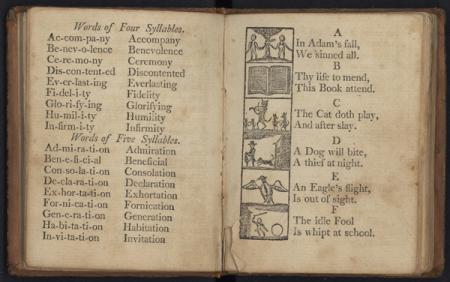
Puritans believed that reading the Bible was achievable for their children. So they began teaching children to read using Scripture in their colonial centers. The New England Primer, first published in Boston in 1690, was used all the way up until the 19th century. With more than five million copies of the New England Primer sold, generations of children first learned their ABCs through studying Scripture.
Here’s why this matters: First, The Gospel is accessible — You don’t need to be a scholar or priest to grasp God’s truth. Ordinary people can read the Bible and meet Christ. Next, obedience is possible — God isn’t playing hide-and-seek with His commands. He communicates clearly so we can obey. Last but not least, the unity of believers is essential. Even though we differ on secondary issues, Christians around the world and across time have understood the Bible’s central truths.
Think of a road sign. It may not answer every question about your journey, but it gives you the clear direction you need. In the same way, the Bible doesn’t tell us everything about everything, but it tells us enough — clearly — to point us to God and guide us in life. We don’t need to be afraid of studying the Bible. God didn’t give His Word only to pastors or theologians; He gave it to His people.
If something feels confusing at first, we should remember the main message is clear: salvation through Jesus Christ and a call to walk in obedience.The Bible is both deep enough for the scholar to swim in and shallow enough for the child to wade in.
III. The Goal of Bible Study
James 1:22-25
22 But be doers of the word, and not hearers only, deceiving yourselves. 23 For if anyone is a hearer of the word and not a doer, he is like a man who looks intently at his natural face in a mirror.24 For he looks at himself and goes away and at once forgets what he was like. 25 But the one who looks into the perfect law, the law of liberty, and perseveres, being no hearer who forgets but a doer who acts, he will be blessed in his doing.
The Bible is meant to transform us, not just give us knowledge. Knowing God’s Word without living it is like looking in a mirror and then forgetting what you look like. Reading God’s Word reveals our hearts, our sins, and our blind spots—it calls us to respond, not just reflect. God’s Word is active and powerful; it produces fruit in our lives when obeyed (James 1:25).
Discussion Questions
What are some practical ways we can “do” the Word, not just read it?
Can you share an example of when Scripture convicted you to change something in your life?
How would your life look different if you truly treated the Bible as a guide for transformation rather than just information?
What’s the danger of reading the Bible but never doing what it says?
Can you think of a time when the Word confronted you—and you had to act?
IV. The Attitude We Need
Psalm 119:18
“Open my eyes, that I may behold wondrous things out of your law.”
Approach Bible study with humility, recognizing we don’t know everything and need God to open our eyes. Come with a heart ready for obedience—learning without acting is incomplete. Prayer before studying is essential. Ask God to guide your understanding and apply truth to your life. Humility and obedience are central: a proud or selective approach will limit what God reveals.
Discussion Questions
How might asking God to “open our eyes” change the way we read the Bible?
Why is humility so important in Bible study, especially when we feel like we already know the text?
How can we intentionally practice obedience to what we learn each week?
How might our approach to Bible study change if we prayed that verse every time before reading?
Closing Thoughts
We don’t study the Bible to know facts—we study the Bible to know God. In the next blog, we’ll get in practical as we ask the question, “How do I observe the text?” We’ll see how practical observation skills help us apply Scripture in daily life. Remember, Bible study should lead to transformation and relationship, not just intellectual understanding. Join me for part two of How to Study the Bible as we dive into our first step in studying: observation. Signing out for now. Talk to you again soon. Thanks for reading.
Discover more from pastorzak.blog
Subscribe to get the latest posts sent to your email.
 pastorzak.blog